
Fire Risk Assessment
Get a Free
Quick Solution of fire


.jfif)
Fire Risk Assessment
It involves:
- Identifying potential fire hazards
- Evaluating who is at risk
- Assessing existing fire safety measures
- Recommending improvements
The goal is to reduce fire risks and ensure safety compliance
What is Fire Risk Assessment?
It involves:
- Identifying potential fire hazards
- Evaluating who is at risk
- Assessing existing fire safety measures
- Recommending improvements
The goal is to reduce fire risks and ensure safety compliance.
Equipment Handling
- How to use fire extinguishers (PASS method)
- Hydrant & hose reel operation
Emergency Response
- Raising alarm
- Calling emergency services
- Handling small fires safely
Evacuation Procedure
- Exit routes & stair usage
- Assembly point rules
- Headcount & safety check
Key Areas Assessed
Fire Hazards Identification
- Electrical faults & overloaded circuits
- Flammable materials (chemicals, fuel, paper)
- Heat sources (machinery, kitchen, generators)
People at Risk
- Employees, residents, visitors
- Special consideration for children, elderly, disabled
Fire Protection Systems
- Fire extinguishers condition
- Alarm system functionality
- Hydrant & sprinkler systems
Escape Routes & Safety Measures
- Emergency exits & staircases
- Fire signage & lighting
- Evacuation plan availability
Fire Pump
Pressure Maintenance Unit Ensures adequate water pressure for effective firefighting.
Water Storage Tank
Stores a sufficient supply of water exclusively for fire emergencies.
Fire Risk Assessment Process
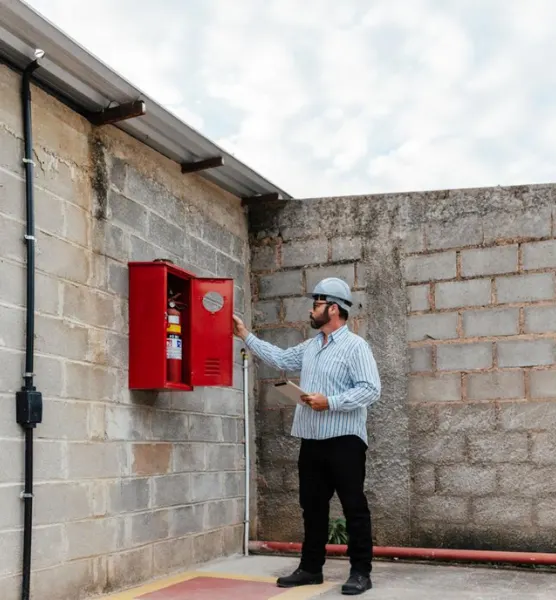
Site Inspection
Physical walkthrough of premises
Hazard Identification
List all potential fire risks
Risk Evaluation
Analyze likelihood and impact
Control Measures
Suggest improvements & corrective actions
Documentation
Prepare detailed assessment report
Compliance & Standards (India)
National Building Code (NBC)
IS Standards (Fire safety codes)
Required for Fire NOC & insurance
Benefits of Fire Risk Assessment
Prevents fire accidents
Ensures legal compliance
Protects lives & assets
Improves workplace safety
Pro Tips
- Conduct assessment annually or after major changes
- Train staff based on identified risks
- Fix high-risk issues immediately
- Maintain proper documentation
What is a Fire Risk Assessment?
A Fire Risk Assessment is a systematic evaluation of a property to identify fire hazards, assess risks, and implement safety measures to prevent fire incidents and ensure occupant safety.
Why is a Fire Risk Assessment important?
It helps in identifying potential fire hazards, reducing risks, ensuring compliance with fire safety regulations, and protecting lives, property, and business operations.
Who needs a Fire Risk Assessment?
Fire Risk Assessments are required for commercial buildings, offices, factories, warehouses, hospitals, schools, hotels, and residential complexes—especially those applying for a Fire NOC.
How often should a Fire Risk Assessment be conducted?
It should be conducted annually or whenever there are major changes in building layout, occupancy, or operations.
What happens after a Fire Risk Assessment?
A detailed report is provided with identified risks and recommended corrective actions to improve fire safety and ensure compliance.