
Emergency Evacuation Planning
Get a Free
Quick Solution of fire


Emergency Evacuation Planning
Emergency Evacuation Planning is a structured process to ensure that people can safely and quickly exit a building during emergencies like fire, earthquake, gas leak, or other hazards.
An effective evacuation plan begins with a detailed assessment of the building layout, identifying all possible exit routes, emergency exits, staircases, and safe assembly points. These routes must be clearly marked with proper signage and should remain free from obstructions at all times. Emergency lighting systems and alarm systems also play a crucial role in guiding occupants during low visibility or panic situations.
Proper role assignment is essential in evacuation planning. Fire wardens, floor coordinators, and emergency teams guide occupants, assist those in need, and ensure safe evacuation. Extra care must be given to disabled individuals, elderly occupants, and visitors unfamiliar with the building.
Key Elements of an Effective Evacuation Plan
Clear Escape Routes
- Marked emergency exits
- Unobstructed pathways
- Staircases (avoid lifts during fire)
Emergency Exit Signage
- Glow/illuminated exit signs
- Directional arrows
- Visible in low light conditions
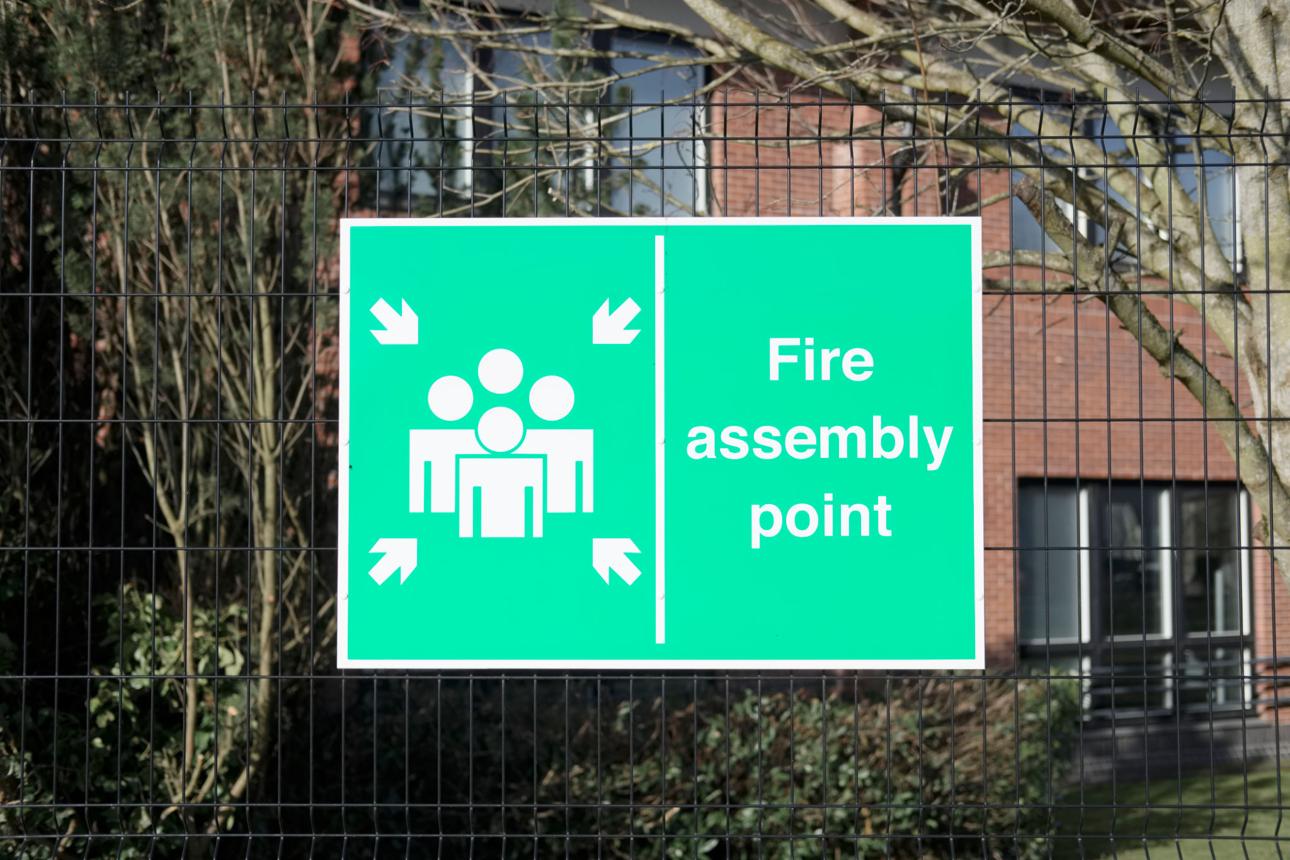
Assembly Point
- Safe location outside the building
- Easy to identify and access
Emergency Contacts
- Fire brigade
- Ambulance
- Internal safety team
Assigned Roles
- Floor wardens
- Fire safety officers
- First aid responders
Evacuation Planning Process
A structured approach to ensure safety, preparedness, and efficient evacuation during emergencies.
Risk Assessment
Identify all potential hazards that may cause emergencies.
Key Focus
- Fire hazards
- Electrical risks
- Chemical exposure
Layout Planning
Develop clear evacuation layouts for every floor.
Key Focus
- Create evacuation maps
- Mark exits clearly
- Ensure visibility
Route Design
Plan safe and efficient evacuation routes.
Key Focus
- Multiple exit routes
- Avoid congestion points
- Clear directional flow
Communication Plan
Ensure proper communication during emergencies.
Key Focus
- Alarm systems
- Public announcements
- Emergency instructions
Training & Drills
Prepare people through regular practice and awareness.
Key Focus
- Mock drills
- Safety training sessions
- Educate residents/employees
Benefits of Evacuation Planning
Safety Starts with a Clear Evacuation Plan
Saves lives during emergencies
A well-planned evacuation strategy ensures that everyone knows exactly what to do when danger strikes, minimizing risks and protecting lives.
Reduces Panic & Confusion
Clear routes, instructions, and drills help people stay calm and act quickly, avoiding chaos during critical situations.
Ensures Quick and Safe Exit
Properly marked exits and organized plans allow for fast movement, preventing bottlenecks and ensuring a smooth evacuation process.
Builds Trust for Businesses & Residents
Demonstrates commitment to safety, increasing confidence among employees, customers, and residents.
Why Choose Our Emergency Evacuation Planning Services?
Expert Safety Consultants
Our experienced professionals design evacuation plans that ensure maximum safety and efficiency during emergencies.
Customized Evacuation Plans
We create site-specific evacuation layouts tailored to your building structure, occupancy, and risk factors.
Compliance with Safety Regulations
All plans are developed in accordance with fire safety norms and legal requirements, helping you stay fully compliant.
End-to-End Support
From planning and layout design to training and updates, we provide complete support for effective emergency preparedness.

Pro Tips
- Conduct fire drills every 6 months
- Keep exits unlocked and unobstructed
- Install emergency lighting & alarms
- Update plan whenever layout changes
What is an emergency evacuation plan?
An emergency evacuation plan is a structured procedure that outlines how people can safely exit a building during emergencies like fire, earthquake, or other hazards. It includes escape routes, exits, assembly points, and responsibilities to ensure everyone’s safety.
How often should an evacuation plan be updated?
An evacuation plan should be reviewed and updated whenever there are changes in building layout, occupancy, or safety regulations. Regular reviews, at least once a year, are recommended.
Why are fire drills important?
Fire drills help occupants understand evacuation routes and procedures, reducing panic and confusion during real emergencies. They ensure everyone can exit quickly and safely.
What should be included in an evacuation plan?
An effective evacuation plan should include clearly marked exit routes, emergency contact details, assembly points, roles and responsibilities, and instructions for safe evacuation.
Who is responsible for implementing the evacuation plan?
The management, safety officers, or designated emergency coordinators are responsible for implementing and maintaining the evacuation plan to ensure everyone follows proper procedures.